
The New Tarot Reference Series
A self-published five-volume Rider-Waite tarot reference series.
Stop guessing meanings. Start reading with structure.
By Domenic C S (Author)
Tap the images below to shop or follow



Tap below to learn more about each volume
Tap a book cover to open its Amazon page



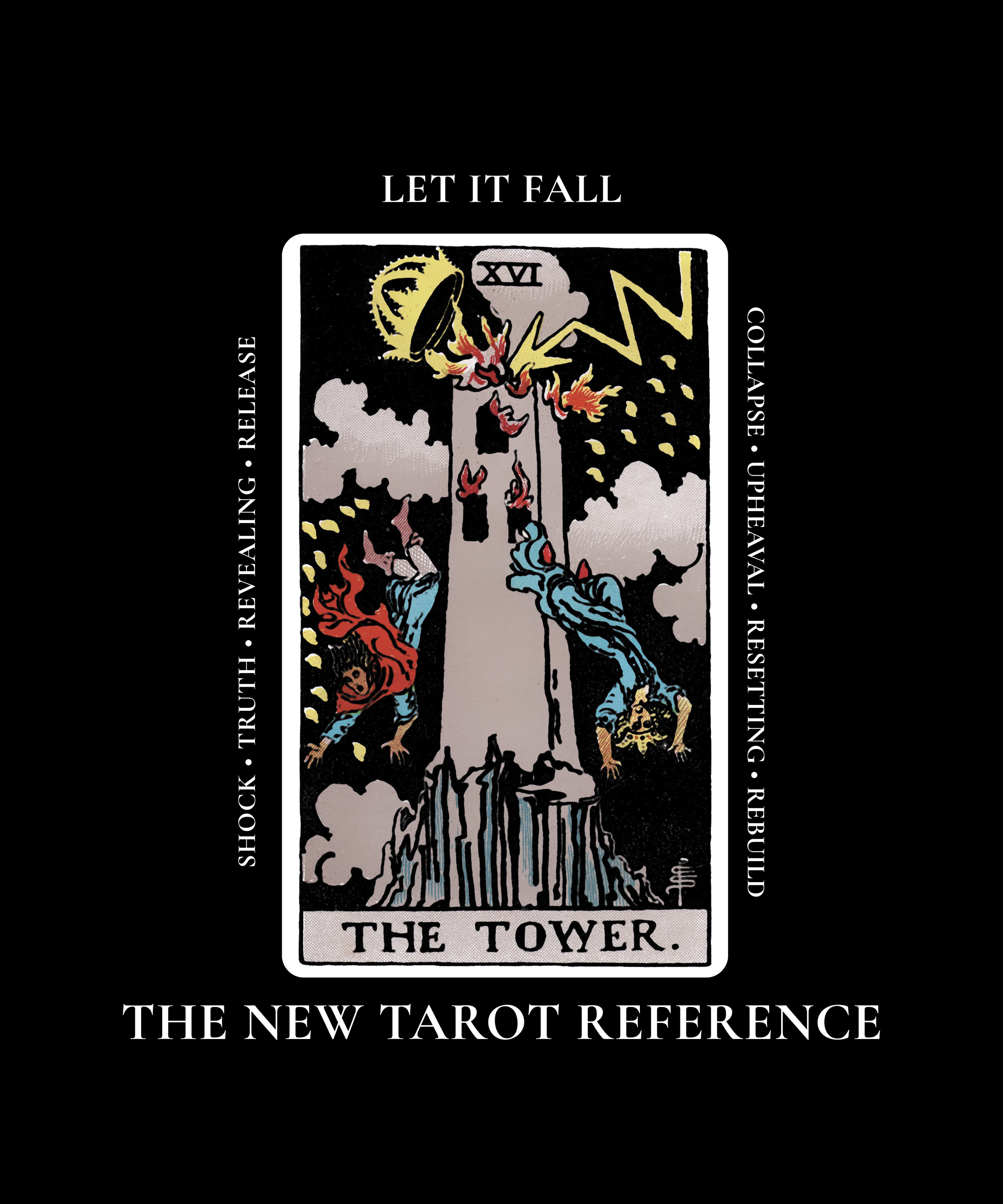
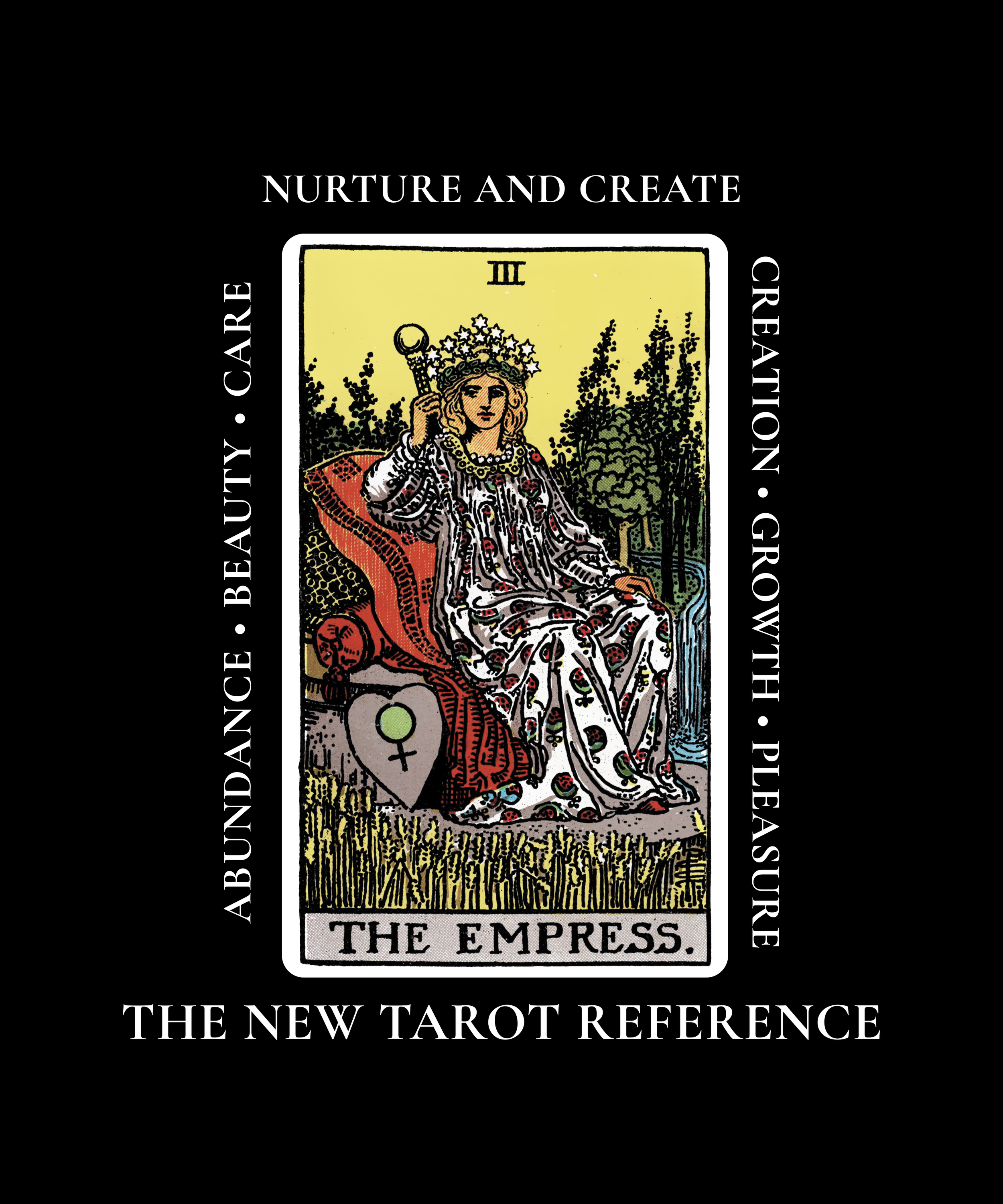
Click my favorite designs to start shopping
This work was inspired in part by collaboration with LAWRcana (the Pink Witch).
Conversations, readings, and repeated questions helped shape the problems this series attempts to solve.
The framework presented in this book was developed through practical work, ongoing questioning, and applied research. The author comes from a technical background and approached tarot with an engineering mindset—seeking to understand how meanings function, how patterns repeat, and how interpretation can remain consistent across different contexts and readers.
Email List
Series updates.
In-person events.
No spam.
Unsubscribe anytime.
Interested in carrying the books?
If you run a metaphysical shop, bookstore, or event table and want to carry The New Tarot Reference series, use this form.
I’ll reply with wholesale information and availability.
About The New Tarot Reference Series
The New Tarot Reference is a self-published five-volume Rider-Waite tarot reference series by Domenic C S. The series was created for tarot readers who want a clearer, more structured way to study, reference, and apply the Rider-Waite tarot system.
Most tarot books rely on loose keywords, personal interpretation, intuition-only guidance, or broad symbolic associations. The New Tarot Reference takes a different approach. It treats tarot as a structured interpretive system. Each volume is designed to help readers understand what a card is doing, how a spread is functioning, and how meanings can be applied consistently across real readings.
This series is built for readers who want clarity, repeatability, and method. It is not a spiritual memoir, a manifestation guide, or a collection of vague daily draw prompts. It is a practical reference system for learning the Rider-Waite tarot, improving interpretation, designing better spreads, and building consistent tarot reading habits.
The five-volume series includes:
The New Tarot Reference Guide: A Structured Framework for the Rider-Waite Deck
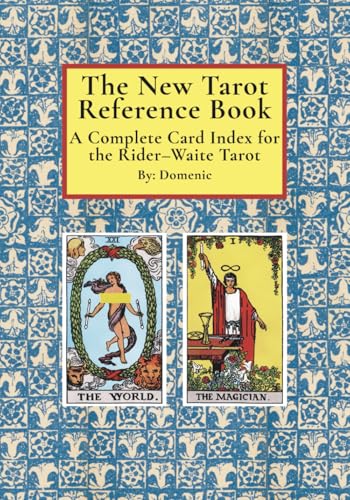
The New Tarot Reference Book: A Complete Card Index for the Rider-Waite Tarot
The New Tarot Reference Spread Logic: Designing, Modifying, and Diagnosing Tarot Spreads
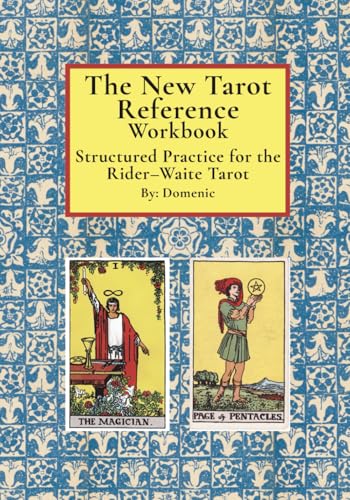
The New Tarot Reference Workbook: Structured Practice for the Rider-Waite Tarot
The New Tarot Reference Elemental Interaction Matrix: Diagnosing Energetic Dynamics
Each book has a specific role. Together, they form a complete tarot study and reference system.
Volume I: The New Tarot Reference Guide
A Structured Framework for the Rider-Waite Deck
The New Tarot Reference Guide is the foundation of the series. This volume introduces the core framework used across the full five-volume system. Instead of treating each tarot card as a disconnected list of meanings, the Guide explains how to approach tarot interpretation through consistent analytic categories, symbolic function, and repeatable logic.
This book is for readers who want to understand how tarot meaning is built. It gives you a framework you can apply across all 78 cards instead of forcing you to memorize vague keywords or rely entirely on intuition.
What this book is about
The Guide explains the structure behind the Rider-Waite tarot deck and gives readers a method for interpreting cards with more consistency. It is designed to help readers understand how card meanings are organized, how symbolic roles function, and how interpretation can remain stable even when readings become complex.
The goal is not to remove intuition from tarot. The goal is to give intuition a stronger structure to work through.
Best for readers who want to:
Learn a structured framework for interpreting the Rider-Waite tarot
Understand the logic behind card meanings
Move beyond vague keywords and memorized phrases
Apply the same analytic categories across all 78 cards
Build a strong foundation before using the full card index
Improve consistency in single-card and multi-card readings
Study tarot from a clear, systems-based perspective
What you get in this volume:
A structured interpretive framework for the Rider-Waite deck
Clear categories for analyzing tarot cards
A repeatable method for understanding card meaning
Diagrams and charts that support visual learning
A foundation for using the rest of the series
A practical alternative to keyword-only tarot study
Who should start with this book?
Start with The Guide if you are new to The New Tarot Reference system. This is the best entry point if you want to understand the structure before moving into card-by-card lookup, spread design, workbook practice, or elemental interaction.
This book pairs especially well with Volume II, The New Tarot Reference Book, which applies the framework to every card in the Rider-Waite deck.
Volume II: The New Tarot Reference Book
A Complete Card Index for the Rider-Waite Tarot
The New Tarot Reference Book is the full card index for the series. It applies the structured framework from Volume I to all 78 Rider-Waite tarot cards. Each card is organized in a consistent format so readers can look up meanings quickly and compare cards more easily.
This is the volume for readers who want a complete Rider-Waite tarot reference book with clean, structured card meanings. It is designed for real use during study, practice, and readings.
What this book is about
This book gives each tarot card a full structured entry. Instead of presenting meanings as loose keywords or isolated interpretations, every card follows the same organized template. This makes it easier to understand the card’s role, function, symbolism, upright meaning, reversed meaning, misconceptions, and practical application.
The book includes original Rider-Waite artwork in full color, making it easier to verify visual details while studying or reading.
Best for readers who want to:
Look up any Rider-Waite tarot card quickly
Study all 78 cards in a consistent format
Compare meanings across suits, ranks, and archetypes
Reduce confusion caused by vague or contradictory meanings
Build repeatable interpretations that hold up over time
Use a card reference that works at the table during readings
Strengthen card-by-card understanding
What you get in this volume:
Structured entries for all 78 Rider-Waite tarot cards
Full-color Rider-Waite card artwork
Baseline meanings for each card
Upright and reversed meanings
Symbolic themes and contextual cues
Misconception checks for common misreads
Practical diagnostics and next-step guidance
Cross-references to related cards and patterns
Who should use this book?
Use The New Tarot Reference Book if you want the main card lookup volume in the series. This is the strongest practical reference for readers who want quick access to structured meanings without flipping through vague keyword lists.
This volume can stand on its own, but it is most effective when paired with Volume I, The Guide, which explains the framework behind the card entries.
Volume III: The New Tarot Reference Spread Logic
Designing, Modifying, and Diagnosing Tarot Spreads
The New Tarot Reference Spread Logic focuses on how tarot spreads work. Single-card meanings tell you what a card represents, but spreads determine how that meaning is used. This volume teaches readers how to design, choose, modify, and repair tarot spreads with clear logic.
Most tarot books treat spreads as fixed diagrams or themed layouts. Spread Logic treats spreads as functional systems. Each position in a spread has a job. Each position asks a specific kind of question. When position logic is unclear, readings become muddy, repetitive, or contradictory.
This book gives readers a method for building spreads that produce cleaner and more useful readings.
What this book is about
Spread Logic explains how tarot spread positions function. It teaches readers how to define positions, reduce overlap, identify redundancy, repair unclear layouts, and create spreads that actually fit the question being asked.
The focus is not on collecting more spreads. The focus is on understanding how spreads work.
Best for readers who want to:
Design tarot spreads from scratch
Understand why some spreads work and others fail
Improve unclear or messy readings
Reduce overlap between spread positions
Choose the smallest spread that can answer the question
Modify existing spreads without breaking their logic
Produce clearer reading outputs
Move beyond fixed layouts and intuition-only spread design
What you get in this volume:
A structural method for designing tarot spreads
Position logic and role definition
Diagnostics for unclear or redundant spread positions
Methods for repairing spreads that collapse or overlap
Guidance for choosing spread size based on the question
Output-focused synthesis methods
Diagrams and models for spread construction
Who should use this book?
Use Spread Logic if you already know basic card meanings but struggle with spreads that feel unclear, too broad, too repetitive, or difficult to synthesize. This volume is especially useful for readers who want to understand the mechanics of spread design instead of relying on pre-made layouts.
This book pairs well with Volume I, The Guide, and Volume II, The Book, because those volumes provide the interpretive framework and card meanings that Spread Logic is designed to organize.
Volume IV: The New Tarot Reference Workbook
Structured Practice for the Rider-Waite Tarot
The New Tarot Reference Workbook is the practice volume in the series. Understanding tarot concepts is one thing. Applying them consistently is another. This workbook gives readers structured exercises, practice drills, and repeatable templates for building tarot reading skill over time.
Most tarot workbooks focus on open-ended journaling or personal reflection. This workbook focuses on structured practice. It is designed to help readers strengthen interpretation through repetition, comparison, categorization, and applied reasoning.
What this book is about
The Workbook helps bridge the gap between knowing card meanings and using those meanings in real readings. It gives readers a disciplined way to practice the Rider-Waite tarot using the same principles found throughout The New Tarot Reference series.
The goal is to build fluency. Instead of guessing, drifting, or relying on mood, readers practice with structure and constraints.
Best for readers who want to:
Practice tarot interpretation methodically
Build consistency across readings
Strengthen symbolic reasoning
Improve pattern recognition
Move beyond theory into applied skill
Use structured tarot exercises instead of vague prompts
Develop repeatable reading habits
Study the Rider-Waite tarot through active practice
What you get in this volume:
Structured tarot practice exercises
Single-card and multi-card drills
Prompts that train comparison and categorization
Exercises for symbolic relationships and pattern recognition
Repeatable templates for testing interpretation
Practice pages designed to be written in and revisited
A methodical way to build tarot reading confidence
Who should use this book?
Use The Workbook if you want to actively practice tarot rather than only read about it. It is especially useful for students who want structure, repetition, and a clear path for improving interpretation.
This workbook can be used independently, but it pairs best with Volume I, The Guide, and Volume II, The Book.
Volume V: The New Tarot Reference Elemental Interaction Matrix
Diagnosing Energetic Dynamics
The New Tarot Reference Elemental Interaction Matrix is the advanced diagnostic volume in the series. Single-card interpretation explains what a card represents, but complex readings require understanding how cards interact. This book introduces a structured matrix-based method for reading multi-card spreads through elemental dynamics.
Most tarot references stop at individual card meanings. The Elemental Interaction Matrix adds another layer by examining how elemental forces combine, support, block, reinforce, or create tension within a spread.
This volume is for readers who want a clearer way to diagnose what is happening across multiple cards.
What this book is about
The Elemental Interaction Matrix focuses on the relationships between cards. It helps readers identify dominant elements, missing elements, blocked flow, imbalance, reinforcement, conflict, and unresolved tension.
Instead of treating a spread as a pile of separate meanings, this volume shows how cards interact as part of a larger structure.
Best for readers who want to:
Analyze complex tarot spreads
Understand multi-card dynamics
Identify dominant and missing elements
Diagnose blocked flow or unresolved tension
Clarify why a spread feels contradictory
Improve synthesis in larger readings
Add an advanced structural layer to tarot interpretation
Move beyond isolated card meanings
What you get in this volume:
A matrix-based system for elemental interaction
Rules for reinforcement, support, conflict, and tension
Methods for identifying dominant and missing elements
Diagnostics for blocked flow and imbalance
Step-by-step breakdowns for compound meanings
Tables and diagrams that make complex interactions easier to compare
A structured method for reading multi-card dynamics
Who should use this book?
Use The Elemental Interaction Matrix if you are already comfortable with tarot basics and want a more advanced way to analyze spread behavior. This volume is best for experienced readers, analytical readers, and anyone working with complex spreads where single-card meanings are not enough.
It can be used on its own, but it works best when paired with Volume I, The Guide, which defines the interpretive logic used across the series.
Which Book Should You Start With?
The best starting point depends on what you need.
Start with The Guide if:
You are new to The New Tarot Reference system
You want the interpretive framework first
You want to understand how meanings are structured
You prefer method, logic, and consistency
You want the foundation before using the other books
Start with The Book if:
You want a complete card index
You want to look up Rider-Waite card meanings quickly
You want all 78 cards in a consistent format
You want a practical tarot reference for readings
You already understand the basics and want the main lookup volume
Start with Spread Logic if:
You struggle with unclear tarot spreads
You want to design your own spreads
You want to understand how spread positions work
You want cleaner reading outputs
You want to move beyond memorized layouts
Start with The Workbook if:
You want structured tarot practice
You learn best by doing
You want drills, exercises, and repeatable templates
You want to improve consistency through repetition
You want to build real interpretive skill
Start with The Elemental Interaction Matrix if:
You are ready for advanced tarot analysis
You work with multi-card spreads
You want to understand card interaction
You want to diagnose energetic dynamics
You want a structural method for synthesis
Recommended Reading Order
The complete recommended order is:
The Guide
The Book
Spread Logic
The Workbook
The Elemental Interaction Matrix
This order moves from framework, to card meanings, to spread design, to practice, to advanced multi-card dynamics.
Readers can also use the books based on need. The Book works well as a standalone card reference. Spread Logic works well for readers focused on layouts and position design. The Workbook works well for practice. The Elemental Interaction Matrix works best for advanced readers who want to diagnose complex readings.
What Makes The New Tarot Reference Different?
The New Tarot Reference is built around structure. The series is designed for tarot readers who want meanings to be consistent, comparable, and repeatable.
Instead of presenting tarot as a collection of disconnected keywords, the series organizes interpretation into a working system. Cards are treated as symbolic functions. Spreads are treated as structures. Practice is treated as skill-building. Multi-card readings are treated as interactions that can be diagnosed and refined.
This approach is especially useful for readers who feel frustrated by vague meanings, contradictory guidebooks, or intuition-only methods that are difficult to repeat.
The series is built for readers who want:
Clear tarot meanings
Structured Rider-Waite interpretation
Consistent card-by-card analysis
Practical reference material
Repeatable reading methods
Better spread design
More reliable synthesis
A tarot system that can be studied, practiced, and improved
Who This Series Is For
The New Tarot Reference is best suited for:
Tarot beginners who want structure from the start
Intermediate readers who feel stuck with vague meanings
Advanced readers who want cleaner systems and diagnostics
Analytical or systems-oriented thinkers
Readers who prefer clarity over mystification
Students of the Rider-Waite tarot deck
Readers who want reference books, not spiritual memoirs
Practitioners who want repeatable methods for real readings
This series may not be the right fit for readers looking for a casual daily draw book, a manifestation workbook, a personal storytelling guide, or a purely intuitive approach to tarot.
The New Tarot Reference is for readers who want to study tarot seriously and apply it with structure.
Frequently Asked Questions
Is The New Tarot Reference for beginners?
Yes. The series can work for beginners, especially readers who prefer structure and clear explanation. The best beginner starting point is Volume I, The Guide, followed by Volume II, The Book.
Do I need all five books?
No. Each book has a specific role and can be used based on what you need. However, the full five-volume series is designed to work together as a complete tarot reference system.
Which book is the main card meaning reference?
Volume II, The New Tarot Reference Book, is the main card index. It covers all 78 Rider-Waite tarot cards in a consistent structured format.
Which book explains the system?
Volume I, The Guide, explains the interpretive framework behind the series.
Which book helps with spreads?
Volume III, Spread Logic, focuses on designing, modifying, and diagnosing tarot spreads.
Which book is for practice?
Volume IV, The Workbook, provides structured exercises and practice templates.
Which book is the most advanced?
Volume V, The Elemental Interaction Matrix, is the most advanced volume. It focuses on multi-card dynamics, elemental interaction, imbalance, support, conflict, and structural diagnosis.
Is this series based on the Rider-Waite tarot?
Yes. The New Tarot Reference is built around the Rider-Waite tarot tradition.
Is this a keyword book?
No. The series avoids keyword-only interpretation. It uses structure, context, role, function, and repeatable logic.
Is this an intuition-based tarot book?
The series does not reject intuition, but it does not rely on intuition alone. It gives readers a clear framework that intuition can work through.
Where can I buy the books?
The New Tarot Reference books are available on Amazon in paperback format. Use the buttons or book links on this page to view the full series and individual volumes on Amazon.
Search Terms and Topics Covered
The New Tarot Reference series covers topics including Rider-Waite tarot meanings, structured tarot interpretation, tarot card reference, tarot study, tarot spreads, tarot workbook practice, tarot spread design, tarot card index, tarot systems, elemental tarot, multi-card tarot readings, tarot diagnostics, tarot learning, tarot symbolism, tarot reading structure, upright and reversed tarot meanings, and tarot practice methods.
Readers looking for a structured tarot book, Rider-Waite tarot reference, complete tarot card index, tarot spread design book, tarot workbook, or advanced tarot system may find The New Tarot Reference useful.

Trademark and affiliation disclaimer: The New Tarot Reference is an independent creation and is not affiliated with, endorsed by, sponsored by, or associated with U.S. Games Systems, Inc., or any related rights holders. All trademarks are the property of their respective owners.
Public domain artwork notice: Card imagery is sourced from public domain reproductions of the classic Rider Waite Smith tradition, originally illustrated by Pamela Colman Smith.